☰
🛕 Lord Vishnu | 📍 Thiruvali and Thirunagari, Mayiladuthurai, Tamil Nadu
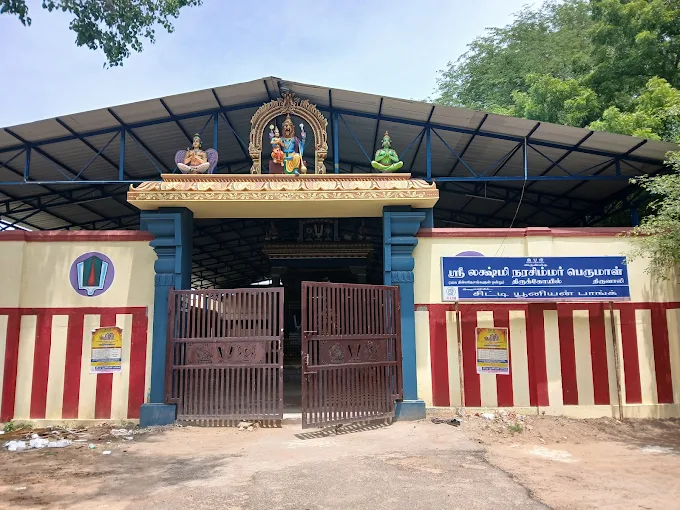
Thiruvali–Thirunagari Divya Desam represents an extraordinary paired sanctuary within the 108 Divya Desams of the Sri Vaishnava tradition. Geographically separated by roughly five kilometres, the twin temples of Thiruvali and Thirunagari are uniquely revered together as a single sacred abode in the Nalayira Divya Prabandham, glorified collectively across 41 hymns primarily sung by Thirumangai Alvar. In the Sri Vaishnava spiritual geography, this sacred belt is intimately intertwined with the life and transformation of Thirumangai Alvar—originally a chieftain named Neelan—who received the Ashtakshara Mahamantra ('Om Namo Narayanaya') directly from Lord Narayana at nearby Vedarajapuram. Thiruvali enshrines Sri Lakshmi Narasimhar (also praised as Azhagiyasingar or Vayalali Manavalan) with Goddess Lakshmi seated uniquely on His right thigh in an affectionate embrace (aalinganam), representing the pacification of the fierce avatar following the destruction of Hiranyakashipu. Thirunagari, recognized as the spiritual epicenter and avatara sthalam of Thirumangai Alvar, enshrines Sri Vedarajan seated facing west, alongside Sri Amruthavalli Thayar, and processional deity Sri Kalyana Ranganathar. Furthermore, Thirunagari houses shrines for both Yoga Narasimhar and Hiranya Narasimhar, making this complex an integral part of the revered Pancha Narasimha Kshetrams around the Thirunangur region. The combined presence of ancient Agamic ritual, poetic heritage, and profound soteriological theology makes Thiruvali–Thirunagari one of the most venerated pilgrimage hubs in the Cauvery delta.
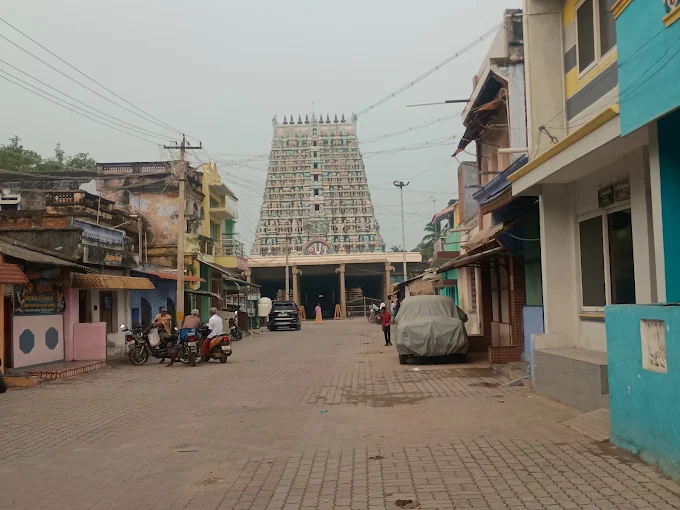
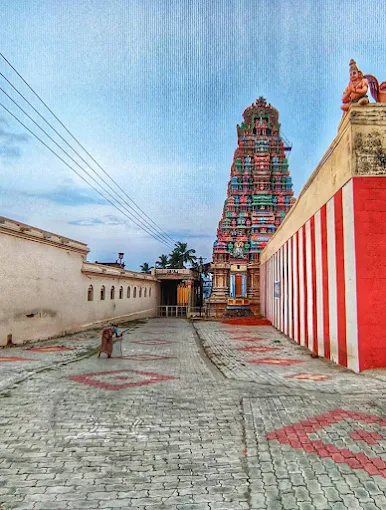
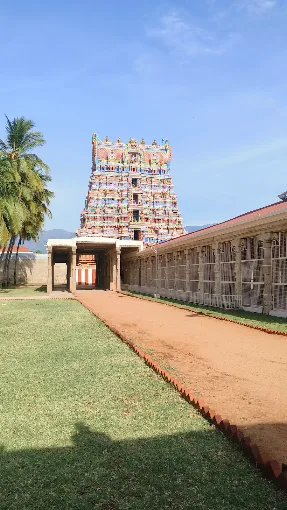
The recorded architectural history of the Thiruvali and Thirunagari temples reflects layered patronages spanning several centuries, primarily under the Imperial Cholas, the Vijayanagara Empire, and the Thanjavur Nayak rulers. The core sanctums and primary granite basement structures date back to the medieval Chola era (circa 10th to 12th centuries CE), consistent with the regional architectural style seen across the lower Cauvery delta. During the 16th century CE, substantial expansion occurred under the patronage of Vijayanagara governors and Thanjavur Nayak sovereigns, who added extensive pillared mandapams, carved stone corridors, and fortified prakara walls. Thirunagari features an imposing seven-tiered Rajagopuram rising over 125 feet, alongside an Ashtanga Vimanam housing stucco depictions of the Dashavatara and Narasimha manifestations. Epigraphical evidence and literary tradition confirm that Thirumangai Alvar, historically placed around the 8th century CE, administered this region under the title 'Aali Nadan' or 'Mangai Mannan'. According to traditional lore, the Lord initiated the chieftain into the Vaishnava path when Neelan attempted to rob the disguised divine couple at Vedharajapuram to finance his vow of feeding one thousand and eight Vaishnava devotees daily. Over subsequent centuries, the temple complex was sustained through royal and local land endowments (inam lands). Today, both temples are conserved and administered under the Hindu Religious and Charitable Endowments (HR&CE) Department of the Government of Tamil Nadu, preserving ancient Thenkalai Vaishnava rituals.
Devotional belief holds that worshipping Sri Kalyana Ranganathar at Thirunagari and Sri Lakshmi Narasimhar at Thiruvali assists in resolving doshas causing delayed marriage and promotes enduring harmony among couples.
As one of the sacred Pancha Narasimha abodes, traditional prayers here are believed to alleviate spiritual distress, fear of adversaries, financial debt (Runa Vimochana), and negative karmic influences.
Because Lord Narayana personally revealed the sacred Ashtakshara Mahamantra to Thirumangai Alvar at this sthalam, devotees pray here for spiritual clarity, academic advancement, and guru kripa.
Praying to Lord Narasimha seated with Goddess Lakshmi on His right side is traditionally considered beneficial for pacifying Angaraka (Mars) and Rahu-Ketu astrological afflictions.
Pilgrims traditionally believe that visiting the avatara sthalam of Thirumangai Alvar and circumambulating the sacred pushkarani cleanses accumulated sins and leads to inner peace and ultimate liberation.
Special sanctum abhishekam and archana performed monthly on the day of the Swathi star, the birth star of Lord Narasimha.
An elaborate annual festival ritual enacting Thirumangai Alvar's interception of the divine wedding procession and his subsequent initiation into the Ashtakshara mantra.
Special dusk worship and thirumanjanam conducted on bi-monthly Pradosham days specifically dedicated to Sri Lakshmi Narasimhar.
Ceremonial divine wedding ritual conducted for Sri Kalyana Ranganathar and Sri Amruthavalli Thayar upon devotional sponsorship by pilgrims.
No festivals available.

📍 1.49 km away
📍 1.86 km away
📍 2.53 km away
📍 2.56 km away
📍 2.58 km away
📍 2.70 km away
Stays near Thiruvali–Thirunagari Divya Desam

📍 Near Kurinji Andavar Temple · 271.7 km
stayStarting from ₹2,000 / night
Discover more temples you may be interested in
You may also like these temples