
☰
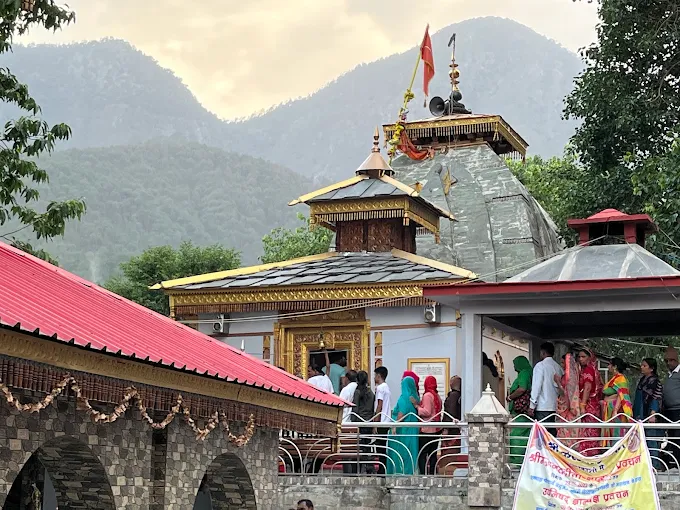
🛕 Lord Shiva | 📍 Uttarkashi, Uttarkashi, Uttarakhand
The Kashi Vishwanath Temple in Uttarkashi holds immense spiritual veneration in the Garhwal Himalayas of Uttarakhand, situated on the banks of the sacred Bhagirathi River at an elevation of approximately 1,158 metres. Revered as 'Saumya Kashi' or the 'Kashi of the North', the town and the shrine are considered the northern Himalayan counterpart to the legendary city of Kashi (Varanasi). According to traditional sacred geography mirrored from the Skanda Purana, Uttarkashi replicates the topography of Varanasi: it is situated along the holy river (Bhagirathi, the primary stream of the Ganga), framed between two hill streams designated locally as Varuna (Syalam Gad) and Asi (Kaligad), and is bordered by a Manikarnika Ghat. The presiding deity of the temple is Lord Shiva, enshrined as Vishwanath ('Lord of the Universe'). Uniquely among Himalayan Shiva temples, the Shiva Lingam inside the sanctum sanctorum noticeably tilts towards the south. Puranic tradition attributes this inclination to the legend of Sage Markandeya, who is believed to have passionately embraced the Shiva Lingam to escape the noose of Yama, the God of Death, after which Lord Shiva manifested to bestow him eternal life. Facing directly opposite the main Vishwanath sanctum in the temple courtyard is the renowned Shakti Temple, which houses a colossal metal trident (Shakti Stambha) measuring over 6 metres in height. This sacred complex represents the union of Shiva and Shakti energies. For pilgrims undertaking the Char Dham Yatra en route to Gangotri, darshan at Uttarkashi Kashi Vishwanath is considered indispensable to seeking divine permission, spiritual cleansing, and safety during Himalayan travel.
The history of the Kashi Vishwanath Temple of Uttarkashi encompasses a vibrant interplay of classical legends, archaeological inscriptions, and recorded royal patronage. In Hindu sacred tradition, the initial establishment of the temple is attributed to the warrior-sage Lord Parashurama. Archaeologically and epigraphically, the temple compound holds deep historical antiquity. Directly opposite the main shrine stands the Shakti Temple housing a mammoth metal trident (Sakti Stambha) with an upper copper shaft and lower iron structure. The trident contains ancient inscriptions written in Sanskrit using late Gupta-period characters dating to around the 6th century CE. The inscription details the martial victories and royal lineage of King Ganeshvara and his illustrious son, King Guha, providing physical documentation of ancient Hindu sovereignty and architectural patronage in the upper Bhagirathi valley. The current stone structure of the Kashi Vishwanath Temple represents traditional Himalayan Katyuri and Garhwali temple architecture, constructed on a raised stone plinth to withstand extreme mountain weather and seismic activity. The present temple structure was substantially rebuilt and renovated in 1857 CE by Maharani Khaneti Devi, the devout queen of Maharaja Sudarshan Shah of the Tehri Garhwal kingdom, after an earlier structure suffered damage. Throughout history, the temple has stood as an institutional centre of Vedic scholarship, sadhana, and a pivotal halting point for ascetics, wandering saints, and pilgrims heading into the inner Himalayas toward the source of the Ganga.
Rooted in the sacred lore of Sage Markandeya embracing this tilted Shiva Lingam to overcome Yama, devotees traditionally believe that worship here dispels deep-seated phobias, anxiety, and the fear of untimely death.
Scriptural traditions and the Skanda Purana hold that worshipping Vishwanath in Uttarkashi bestows the same transcendent spiritual liberation (Moksha) and inner purification as performing pilgrimage in Varanasi.
Visiting the courtyard's ancient Shakti Temple and its sacred trident alongside Lord Shiva is believed to confer courage, spiritual protection, and destruction of negative energies.
A deeply rooted regional tradition sees couples praying before Lord Vishwanath during Maha Shivratri, holding lighted oil lamps overnight to seek the blessing of healthy children and familial harmony.
Set against the pristine Himalayan peaks by the pristine waters of the Bhagirathi, prayers here offer profound meditative silence, helping spiritual seekers transcend worldly stress.
Traditional Vedic ritual bath of the sacred tilted Shiva Lingam with panchamrit (milk, curd, honey, ghee, sugar), holy Bhagirathi water, and chanting of Sri Rudram. Arranged privately through temple priests.
Devotees personally bring fresh holy water from the adjacent Bhagirathi River to pour onto the Shiva Lingam seeking spiritual purification and blessings.
Special night-long observance during Maha Shivratri where devotees perform night vigils (Jagran) and offer continuous earthen oil lamps for divine grace and fulfillment of vows.
Special floral and sacred bael leaf offerings performed daily during the holy month of Shravan, accompanied by constant chants of Om Namah Shivaya.
No festivals available.
📍 30.17 km away
📍 56.09 km away

📍 59.78 km away
📍 100.33 km away
📍 175.49 km away
📍 192.54 km away
Stays near Uttarkashi Kashi Vishwanath Temple

📍 Near Kurinji Andavar Temple · 2,280.4 km
stayStarting from ₹2,000 / night
Discover more temples you may be interested in
You may also like these temples


